ai
content-creation
image
social-media
tutorial
GPT Image 2 Prompt Guide: 70 Viral ChatGPT Image Prompts for TikTok, Instagram & Ads (2026)

- GPT Image 2 is OpenAI's latest image model and is dramatically better at typography, photoreal product shots, and character consistency than GPT-4o image generation.
- Most "ChatGPT image prompts" floating around online are written for designers, not for creators trying to go viral on TikTok or Instagram. The framework and examples in this guide are built for short-form social.
- Every viral image prompt follows the same six-block formula: Subject, Scene, Style, Composition, Lighting, Constraints. Once you internalize it, you can write your own without copying anyone.
- The 70 prompts below cover 12 categories most creators actually need: slideshow frames, scroll-stoppers, UGC product shots, before/afters, in-image text, faceless channels, character series, ad variations, memes, and more.
- Pair the prompts with Genviral AI Studio to bulk-generate, swap characters, and feed the results straight into your TikTok or Instagram scheduler.
The release of GPT Image 2 changed what's possible with one-shot AI images. Sharper text inside the image, consistent characters across multiple frames, photoreal product shots that don't scream "AI" — all from a single prompt.
The catch is that almost every prompt guide online is still written for the previous generation of models. Vague style words. No structure. No real use cases beyond "cinematic portrait, 8k, ultra-detailed."
This guide is different. Every prompt below is written for one job: producing images that perform on TikTok, Instagram, and paid ads. If you've ever tried to generate a slideshow frame, a hook image, or an ad creative with ChatGPT and ended up with something off-brand or unusable, this is the fix.
What's New in GPT Image 2
Before the prompts, the short version of what actually changed in this model. It matters for how you write the prompt.
- Text inside images is finally accurate. GPT Image 2 can render full sentences, brand names, captions, and stylized typography without garbled letters. That unlocks slideshow hooks, ad copy overlays, and in-image CTAs.
- Character consistency across frames is much better. You can describe a character once, anchor them, and reuse the description across a multi-frame story or a series.
- Photoreal product shots look like studio photography. Glass, liquid, fabric, and skin textures hold up at scroll-stopping resolution.
- Composition follows instructions. Camera angle, shot type, framing, and rule-of-thirds language all work. The model stops fighting you when you ask for a specific framing.
- Multi-image referencing lets you pass in labeled inputs (a face, a product, a style reference) and combine them in one output.
The trade-off: GPT Image 2 rewards specific, structured prompts and punishes vague stylistic spaghetti. Long lists of stock words like "trending on artstation, 8k, ultra-detailed, masterpiece" actively make outputs worse.
How to Write Effective Prompts for GPT Image 2
There is one framework that consistently produces usable images. Six blocks, in this order. You don't have to label them — you just have to include all of them.
The 6-Block Viral Image Formula
- Subject — what the focal point is. Product, person, character, object. Be specific: "a 30-year-old woman with shoulder-length dark hair" beats "a woman."
- Scene — where it lives. Background, environment, surface, time of day, location.
- Style — the visual register. Photoreal, editorial, anime, claymation, retro film. Pick one. Stacking five styles confuses the model.
- Composition — framing and angle. Close-up, wide, over-the-shoulder, top-down flat lay, low-angle hero shot, rule of thirds.
- Lighting & Mood — light source, color temperature, and emotional tone. Soft window light, harsh midday sun, neon, golden hour, moody, clinical.
- Constraints — what must be true. Aspect ratio, no text vs. specific text, color palette, what to exclude.
That's it. Below is the exact same idea applied at two levels of skill.
Basic Prompt (Beginner)
A skincare serum bottle on a white marble surface, photorealistic, top-down flat lay, soft natural window light, clean minimal aesthetic, 9:16 aspect ratio.
It hits all six blocks but lightly. Good enough for a quick post.
Advanced Prompt (Production)
Editorial product shot of a frosted-glass skincare serum bottle, 30ml, dropper top. Surface: textured beige limestone with two dried eucalyptus stems. Background: out-of-focus warm beige curtain. Style: photoreal editorial, magazine quality. Composition: 3/4 angle hero shot, product centered slightly left, rule of thirds, bottle fills 40% of frame. Lighting: soft directional window light from upper-left, gentle shadow falling right, golden-hour color temperature. Label reads "LUMIÈRE SERUM" in thin serif font, white text, perfectly legible. Constraints: 9:16 vertical, no people, no extra props, sharp focus on label, shallow depth of field on background.
Same six blocks. Just precise. This is what produces ad-ready output in one shot.
A quick sanity check before you generate: if you can't underline each of the six blocks in your prompt, you're going to fight the model. Add the missing ones first.
70 Viral ChatGPT Image Prompts for GPT Image 2
The prompts below are grouped by the 12 jobs creators actually hire image generation for. Copy a category, swap the variables in [brackets], and ship. Every prompt is written for 9:16 by default — the format TikTok, Reels, Shorts, and most ads use.
Every category below includes a real GPT Image 2 result generated from one of the prompts in that section. No upscaling, no edits, no retouching — single-shot output.
1. TikTok Slideshow Frames
Slideshow posts are still the cheapest organic-reach play on TikTok and Instagram. The trick is that each frame has to feel like a frame, not a stock image. Specific, narrative, in-the-moment.
- A 25-year-old woman in an oversized cream knit sweater holding a steaming ceramic mug, sitting on a beige linen sofa next to a sleeping golden retriever, soft afternoon window light, photoreal, shot on 35mm film, slight grain, 9:16 vertical, candid feel, no text.
- POV walking through a foggy pine forest at sunrise, a thin shaft of orange light cutting between the trees, dirt path with morning dew, photoreal, shot on iPhone, slight motion blur, 9:16, atmospheric, no people.
- Flat lay on a wooden desk: an open journal with handwritten cursive, a black ceramic mug of coffee, a small green plant, gold-rimmed glasses, soft north-facing window light, photoreal, top-down, 9:16, warm minimal aesthetic.
- A teenager in a navy hoodie sitting cross-legged on a dorm room floor surrounded by string lights, glow of a laptop on their face, midnight blue and warm amber lighting, photoreal, candid, low-angle, 9:16, lo-fi mood.
- Close-up of two hands holding a polaroid photo of a sunset over the ocean, blurred beach in the background, golden-hour rim light on the fingers, photoreal, shallow depth of field, 9:16, nostalgic.
- A 30-something man jogging across an empty city bridge at 5:50am, breath visible in the cold air, orange streetlamps reflecting on wet asphalt, photoreal, wide low-angle, 9:16, cinematic.
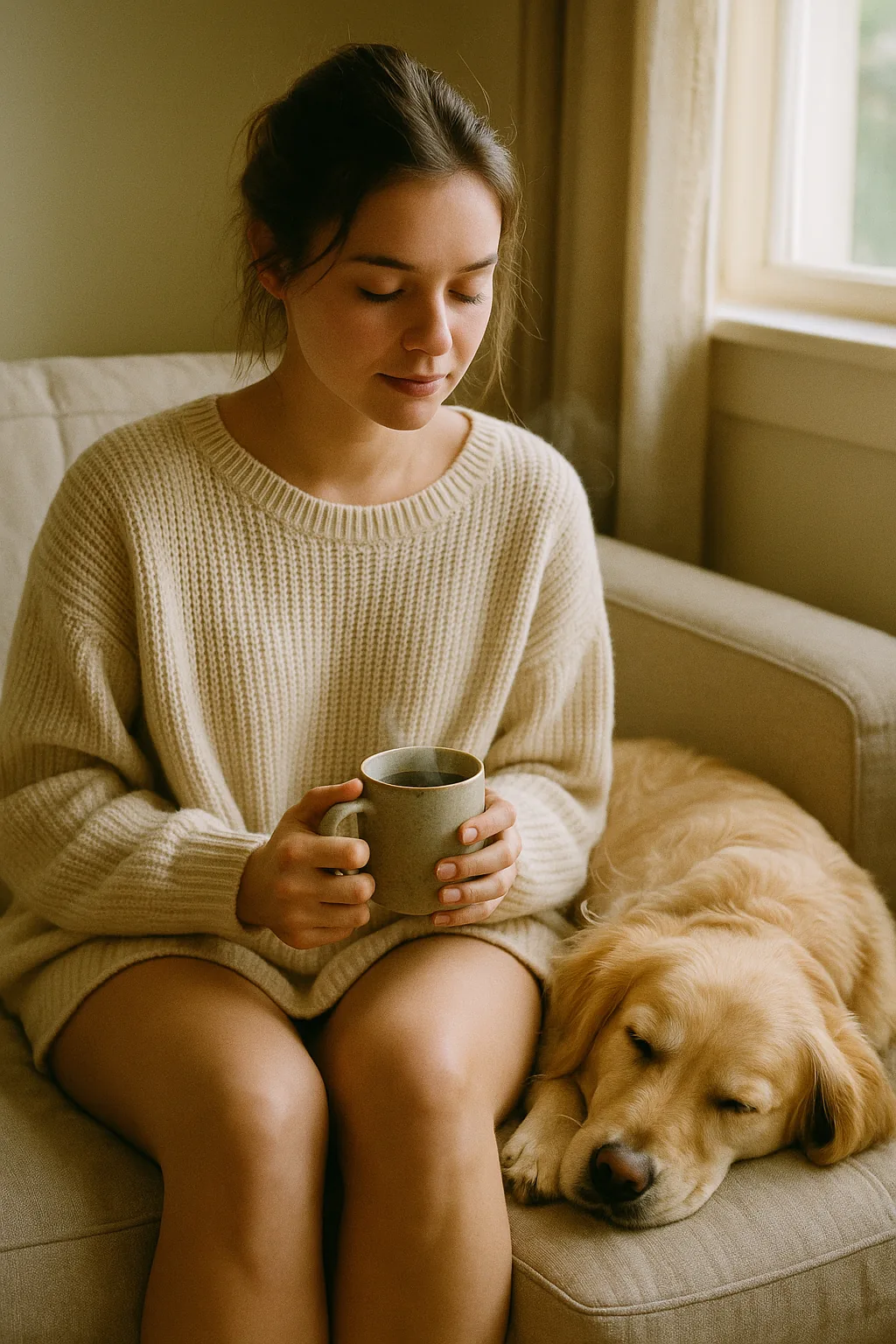
Above: real one-shot output from prompt 1. Notice the 35mm grain, soft window light, and candid feel — that's what saying "shot on 35mm film" does to the model.
2. Scroll-Stopping Hook Frames
Hook images live or die in the first 0.4 seconds. They need a single visual concept the eye locks onto. Avoid clutter, avoid more than one focal point, and let one element break a pattern.
- A perfectly stacked tower of glossy red apples on a white pedestal, one single green apple wedged in the middle of the stack, hard studio light, deep shadow, photoreal, centered composition, 9:16, minimal background, no text.
- A businessman in a grey suit standing on a busy sidewalk, surrounded by a swarm of blurred commuters all walking the opposite direction, sharp focus on him, motion blur on everyone else, photoreal, eye-level, 9:16, dramatic.
- A single hand reaching up from inside a sea of crumpled hundred-dollar bills, fingers grasping for air, photoreal, top-down, harsh overhead light, 9:16, surreal.
- A vintage TV set sitting alone in the middle of a sun-bleached desert, static on the screen, cracked dry ground, blue sky with two clouds, photoreal, wide eye-level, 9:16, surreal cinematic.
- A close-up of a glass jar labeled
"REGRET"in handwritten marker, filled with crumpled paper notes, sitting on a wooden table, photoreal, shallow depth of field, 9:16, the label is the focal point. - A man standing at the edge of a glass cliff that drops into clouds, back turned to camera, dramatic backlight, photoreal, wide low-angle, 9:16, mood: contemplative.
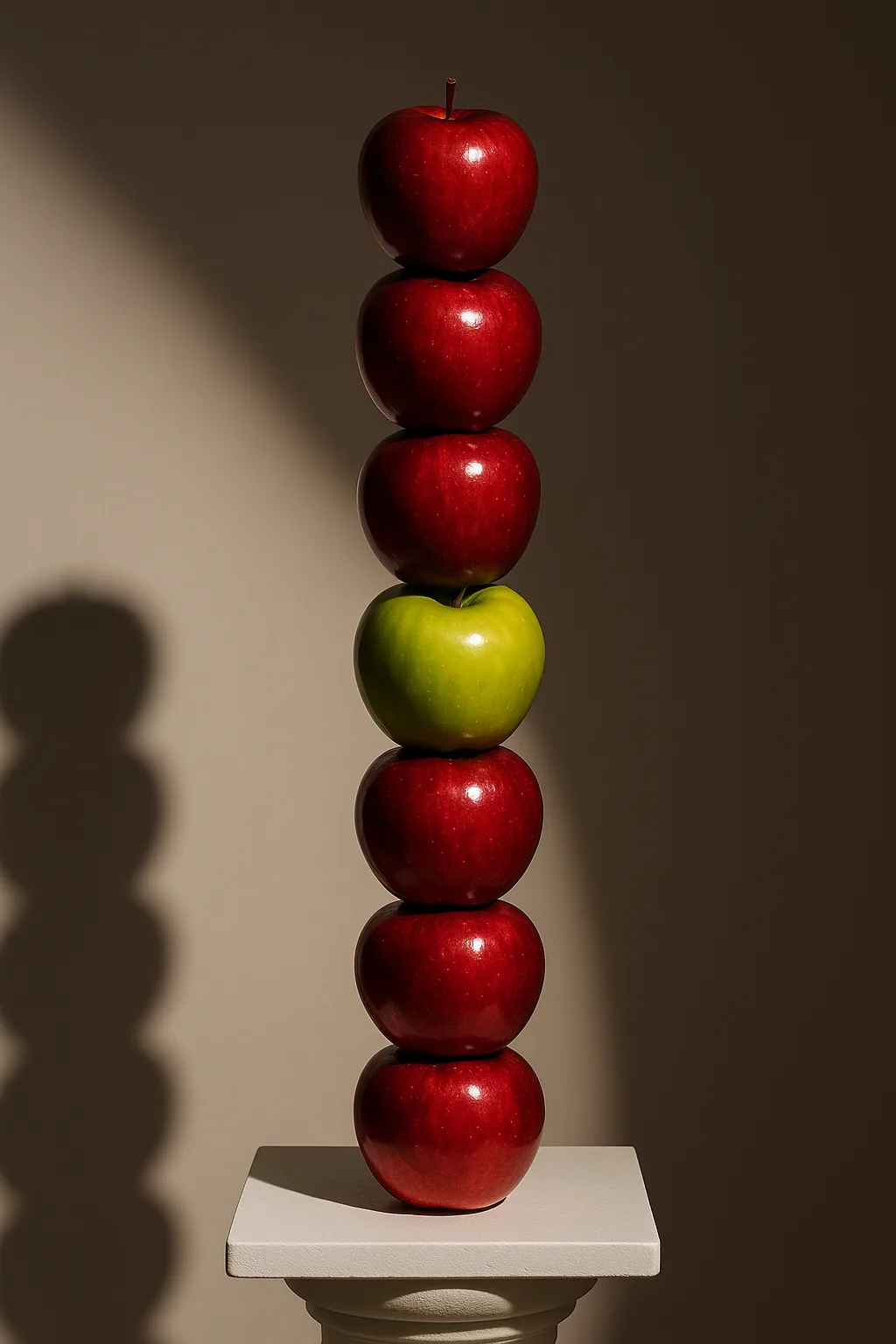
Above: prompt 7. The whole hook is one pattern broken by one element. That's the formula for a scroll-stopper.
3. UGC-Style Product Photography
The look that converts on TikTok Shop, Instagram, and Meta ads. Casual, in-hand, real-feeling — not a studio campaign.
- POV hand holding a [matte black water bottle] in front of a sun-drenched gym mirror, the user mid-workout, slight motion in the reflection, natural light, photoreal, 9:16, no logo on the bottle, no text.
- An overhead shot of a [pastel pink phone case] sitting on top of an open journal next to a vanilla latte and a small bouquet of dried flowers, on a marble café table, photoreal, top-down, soft daylight, 9:16, lifestyle.
- A 20-something woman in a beige cardigan unboxing a [white skincare jar] at a kitchen counter, tissue paper visible, morning light streaming in, candid photoreal, 3/4 angle, 9:16, no faces in clear focus, mood: cozy.
- POV of someone applying a [tinted lip balm] in a car rearview mirror, golden-hour light hitting the side of the face, slightly out of focus to feel real, photoreal, 9:16, mood: getting-ready.
- Close-up of a [protein bar] half-unwrapped on a hiking trail, mountain background out of focus, beads of sweat on a hand holding it, photoreal, eye-level, 9:16, outdoor lifestyle.
- A [reusable coffee cup] sitting on a stack of books on a hotel windowsill overlooking Tokyo at dawn, steam rising, photoreal, 3/4 angle, 9:16, warm mood, no text.
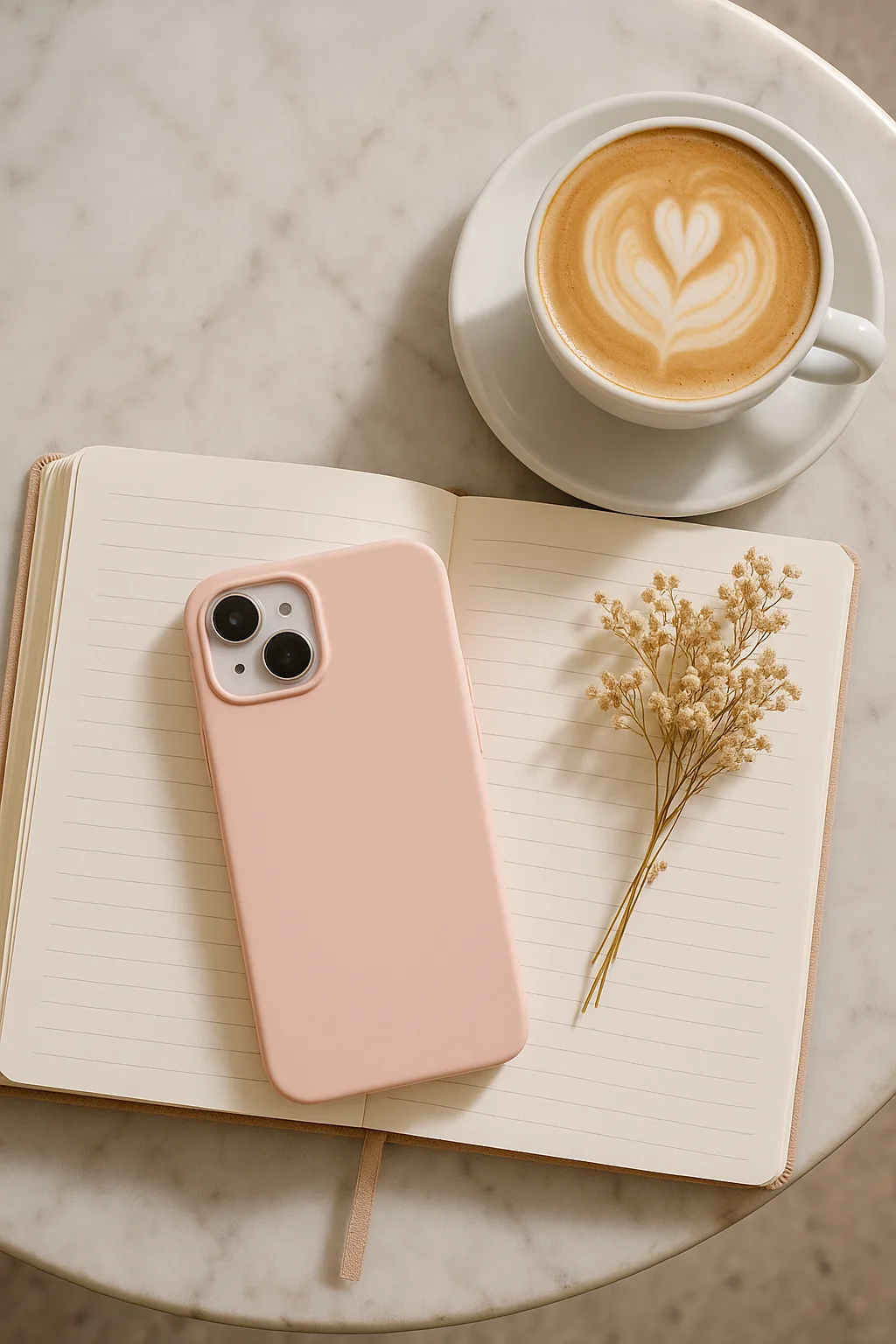
Above: prompt 14. The flat lay reads as a real person's table, not a stock photo. That's what "lifestyle, soft daylight, marble café table" gets you.
4. Before / After & Transformation Frames
The single highest-CTR ad format. Two frames. One contrast. Photoreal — never collage-y.
- A "before" frame: a cluttered kitchen counter at 7am, dishes piled in the sink, half-eaten toast, harsh fluorescent overhead light, photoreal, eye-level, 9:16, mood: stressful.
- A matching "after" frame: the same kitchen counter spotless, soft morning sun through the window, a single ceramic mug of coffee and a small plant on the counter, photoreal, same angle as before, 9:16, mood: calm.
- A "before" portrait: a tired woman in her 30s at 6am, no makeup, harsh top light, photoreal, slight under-eye shadow, neutral expression, 9:16, mood: drained.
- A matching "after" portrait: same woman, same lighting setup, glowing skin, subtle natural makeup, soft smile, photoreal, 9:16, mood: confident — same camera angle, same crop.
- A "before" room: a small home office with tangled cables, an old laptop, scattered papers, harsh overhead light, photoreal, wide-angle, 9:16.
- A matching "after" room: the same home office redesigned with a clean desk, single monitor, warm lamp, plant, hidden cables, photoreal, identical wide-angle, 9:16, mood: focused.
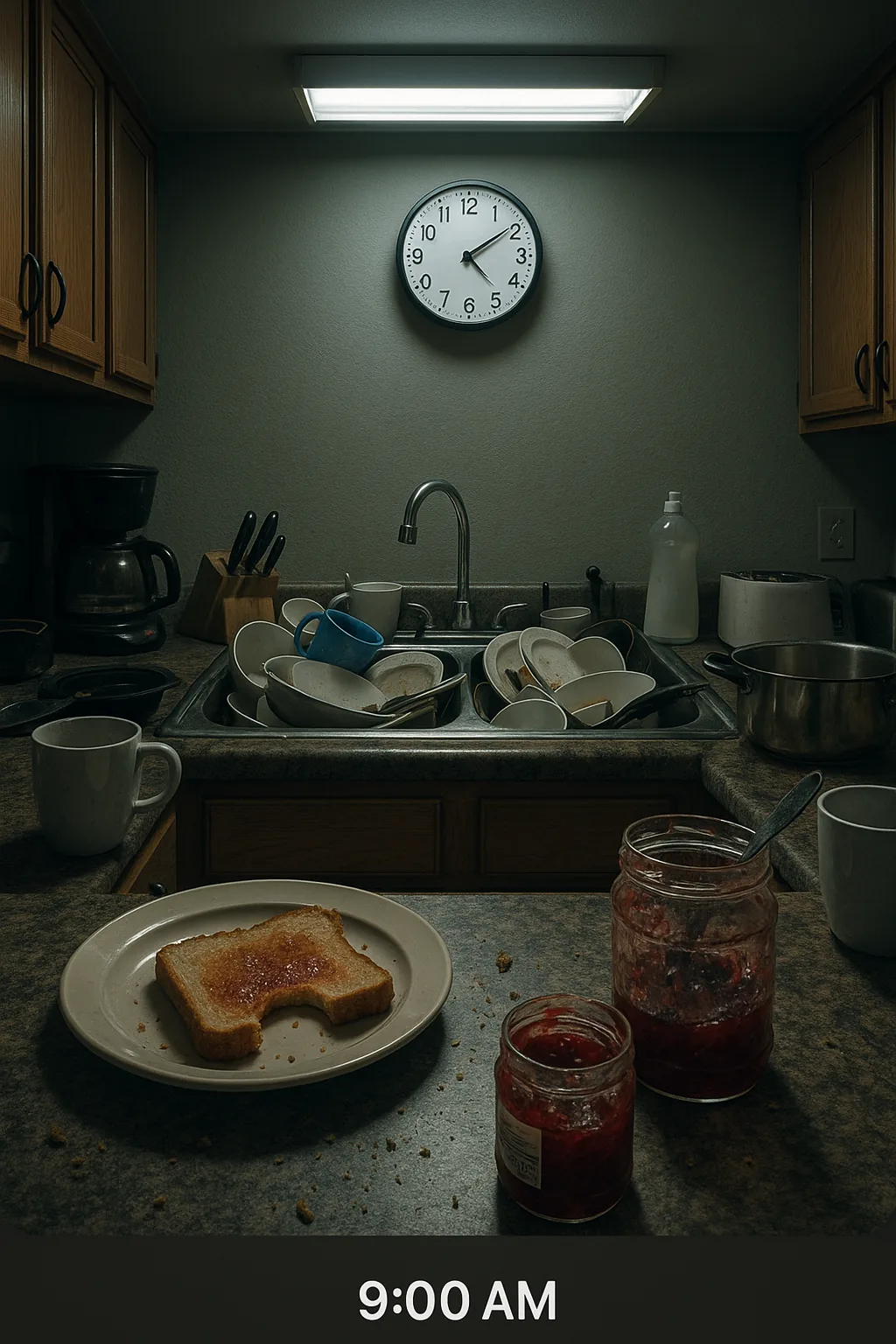
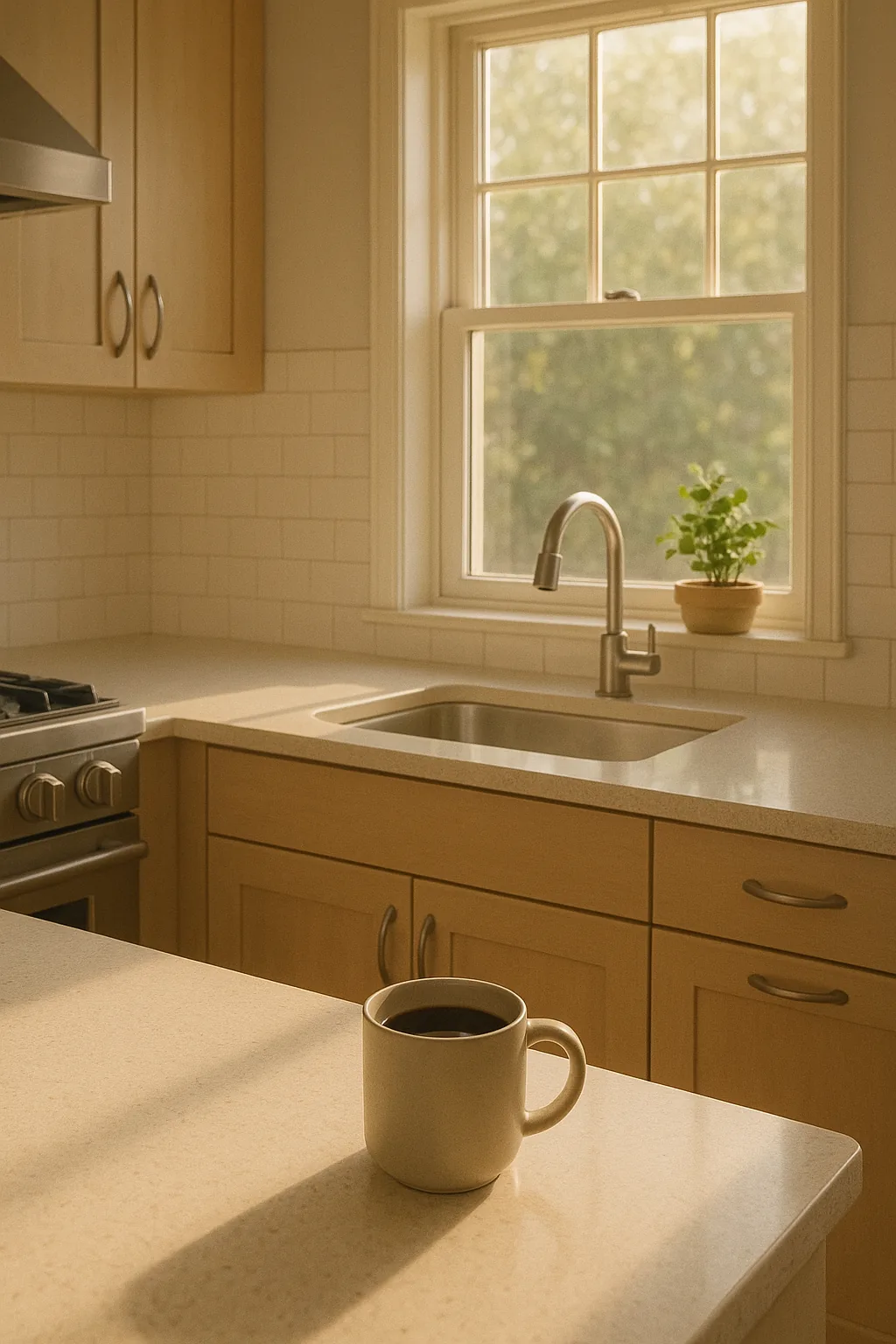
Above: prompts 19 and 20 as a pair. The same camera angle, the same room, opposite mood. Tell the model explicitly to hold the angle constant — otherwise it drifts.
5. Faceless Channel Visuals
For motivation, finance, history, sleep, and AI-niche channels that don't show a person. The goal is mood, not identity.
- A vintage typewriter on an old wooden desk in a dimly lit study, a half-finished page in the carriage, brass lamp glow on the keys, photoreal cinematic, close-up 3/4 angle, 9:16, mood: thoughtful, no people.
- An old leather journal lying open on a stone wall overlooking a misty mountain valley at dawn, photoreal, top-down, 9:16, mood: introspective, no people, no text.
- A globe on a polished mahogany desk in a library, golden hour light through tall windows, dust particles visible in the beams, photoreal, eye-level, 9:16, mood: scholarly, no people.
- A futuristic minimalist server room with one blue glowing rack at the end of a long corridor, cool neutral tones, photoreal, one-point perspective, 9:16, mood: AI/tech, no people.
- A pocket watch on an old map of the world, soft tungsten light, photoreal, top-down, 9:16, mood: timeless, no people, no text.
- A single candle burning on a stack of leather-bound books in a dark room, warm flicker as the only light source, photoreal, close-up, 9:16, mood: focused, no people.
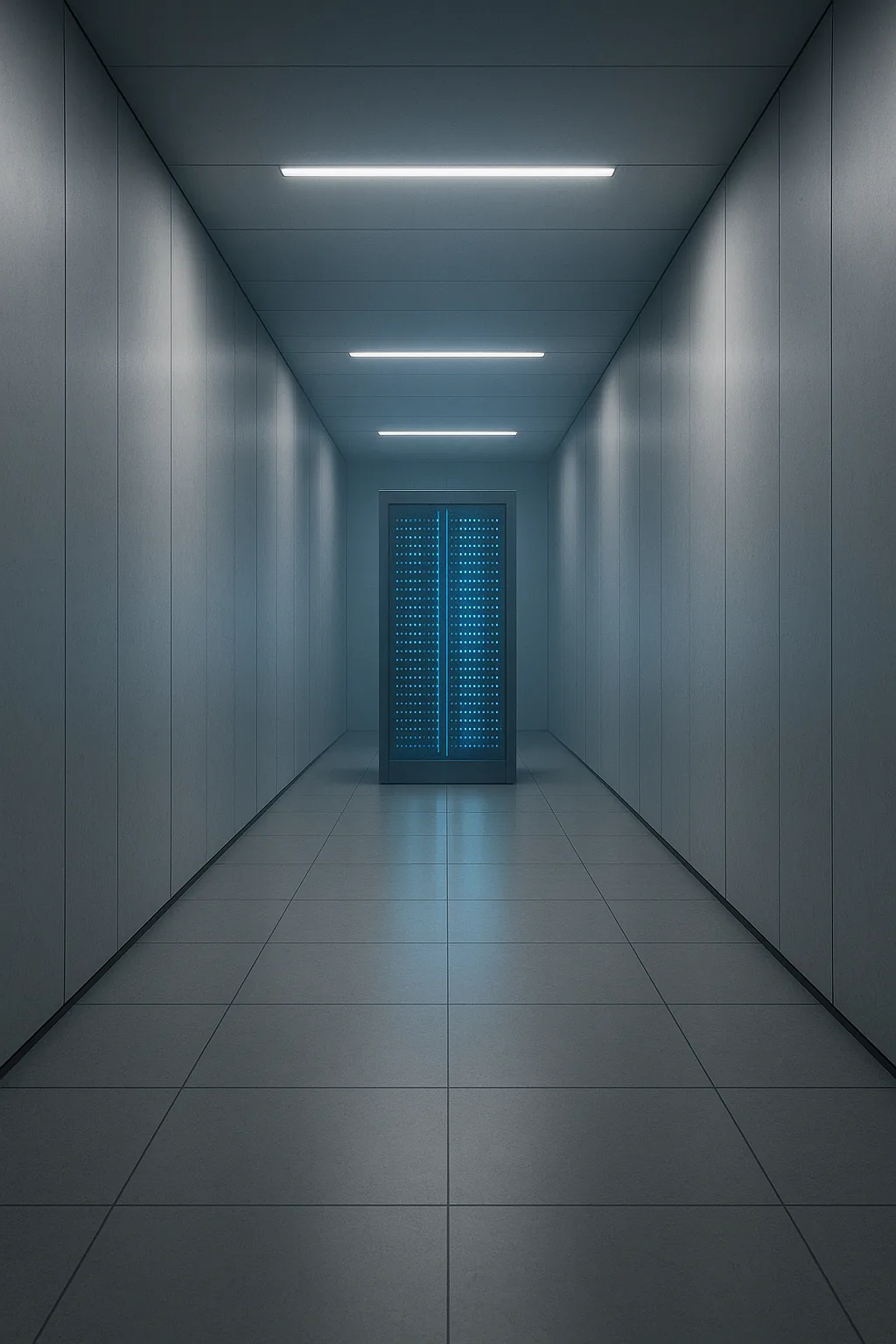
Above: prompt 28. One-point perspective + a single accent color = mood without a face. Works for AI, finance, and tech niches.
6. In-Image Text & Caption Hooks
GPT Image 2's biggest unlock. Text inside the image is finally legible. Use it for hooks, captions, slide titles, and CTAs.
- A close-up of a torn piece of notebook paper taped to a fridge, handwritten in black sharpie:
"day 47 — still showing up", photoreal, slightly crumpled, soft window light, 9:16, focal point is the text. - A neon sign glowing in a dark room that reads
"YOU ARE LATER THAN YOU THINK"in cursive pink neon, brick wall background, photoreal, 9:16, mood: urgent, sign is the focal point. - A coffee cup sleeve printed in clean sans-serif:
"Tuesday: try again", held in a hand, blurred café in background, photoreal, 9:16, candid. - A vintage diner menu board with white plastic letters reading
"TODAY'S SPECIAL: STOP SCROLLING", photoreal, eye-level, 9:16, retro mood. - A sticky note on a laptop trackpad in clean handwriting:
"first principles — what is the actual problem", photoreal, top-down, soft daylight, 9:16, productivity mood. - A blank white book cover on a wooden table, embossed in gold serif:
"THINGS I'LL NEVER REGRET DOING", photoreal, 3/4 angle, soft north-facing light, 9:16.
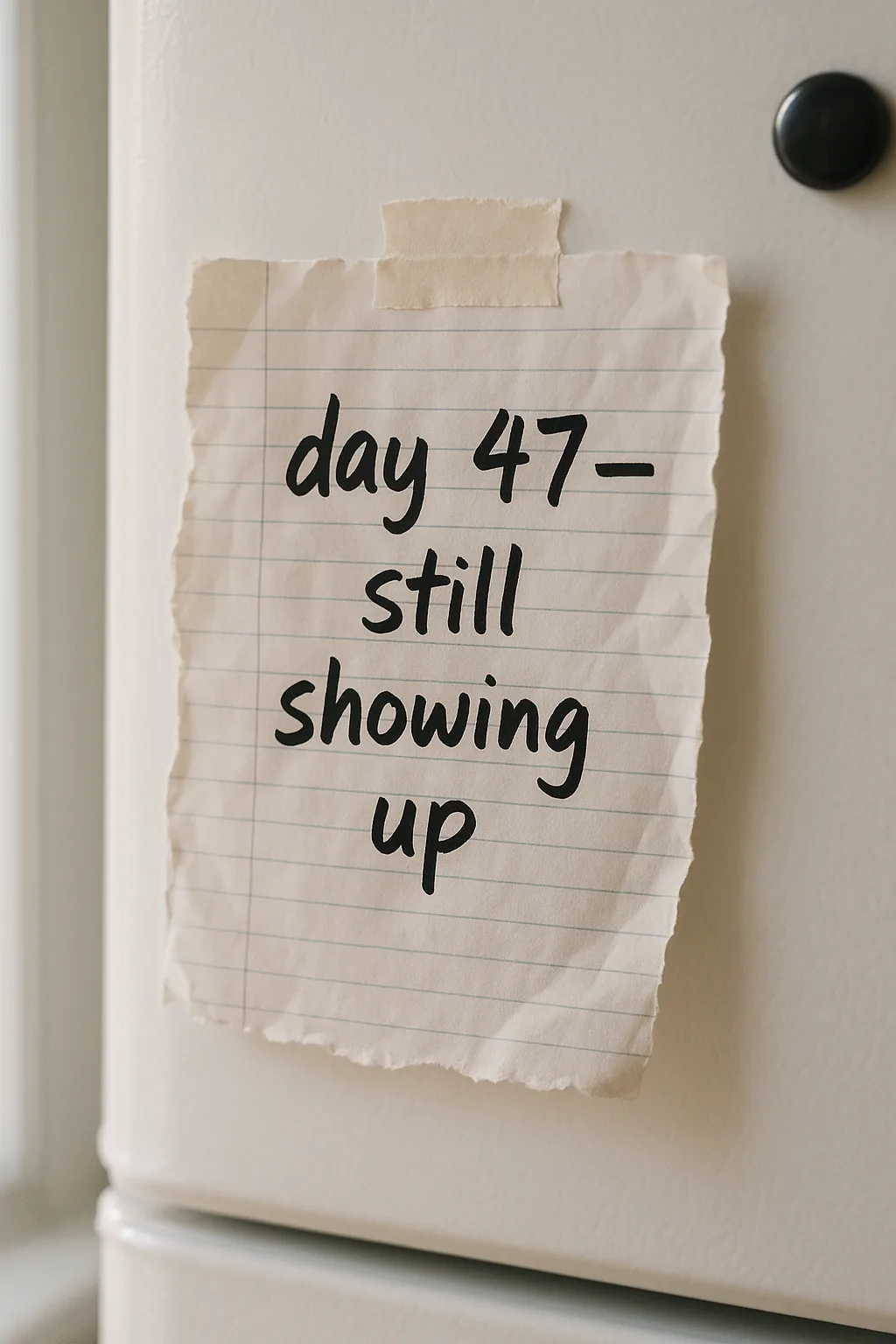
Above: prompt 31. Every letter is legible, including the em-dash and lowercase. This is the single biggest change in GPT Image 2 — text inside the image just works.
7. Character Consistency (Series & Story Mode)
For creators running a recurring character across multiple posts — a faceless mascot, a stylized founder, a niche character. Define once, reuse the exact same description every time.
Character anchor (use this verbatim in every follow-up prompt):
"Maya, a 28-year-old woman with shoulder-length wavy dark brown hair, light brown eyes, light olive skin, a small silver hoop in her left ear, wearing a cream oversized knit sweater and dark blue jeans. Friendly, slightly thoughtful expression. Photoreal style, soft natural lighting."
Now reuse her in different frames:
- Maya sitting at a small wooden café table by a rain-streaked window, mug of coffee, reading a paperback book, photoreal, 3/4 angle, 9:16, mood: cozy.
- Maya walking down a narrow Lisbon cobblestone street, tote bag on her shoulder, photoreal, eye-level from behind, 9:16, golden hour.
- Maya cooking in a sunlit kitchen, chopping vegetables on a wooden board, photoreal, 3/4 close-up on her hands and the board, 9:16, mood: relaxed.
- Maya in a bookstore reaching up for a book on the top shelf, photoreal, low-angle, 9:16, soft tungsten light.
- Maya sitting cross-legged on a rooftop at dusk with a journal, city skyline in the background, photoreal, wide eye-level, 9:16, mood: reflective.
- Maya laughing on the phone in a park, photoreal, candid 3/4 angle, golden-hour light, 9:16, mood: warm.
The character description never changes. Only the scene, composition, and lighting move.
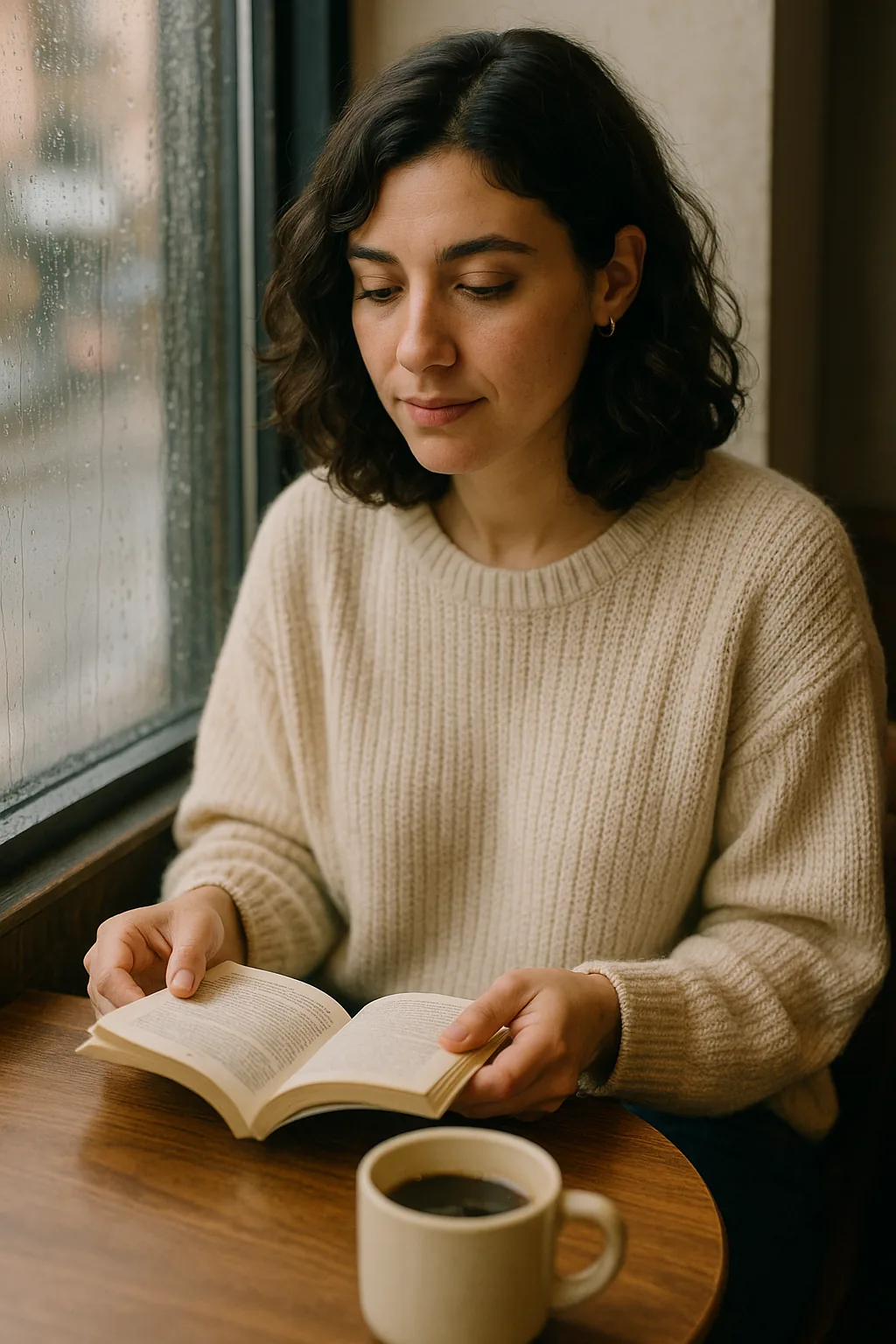
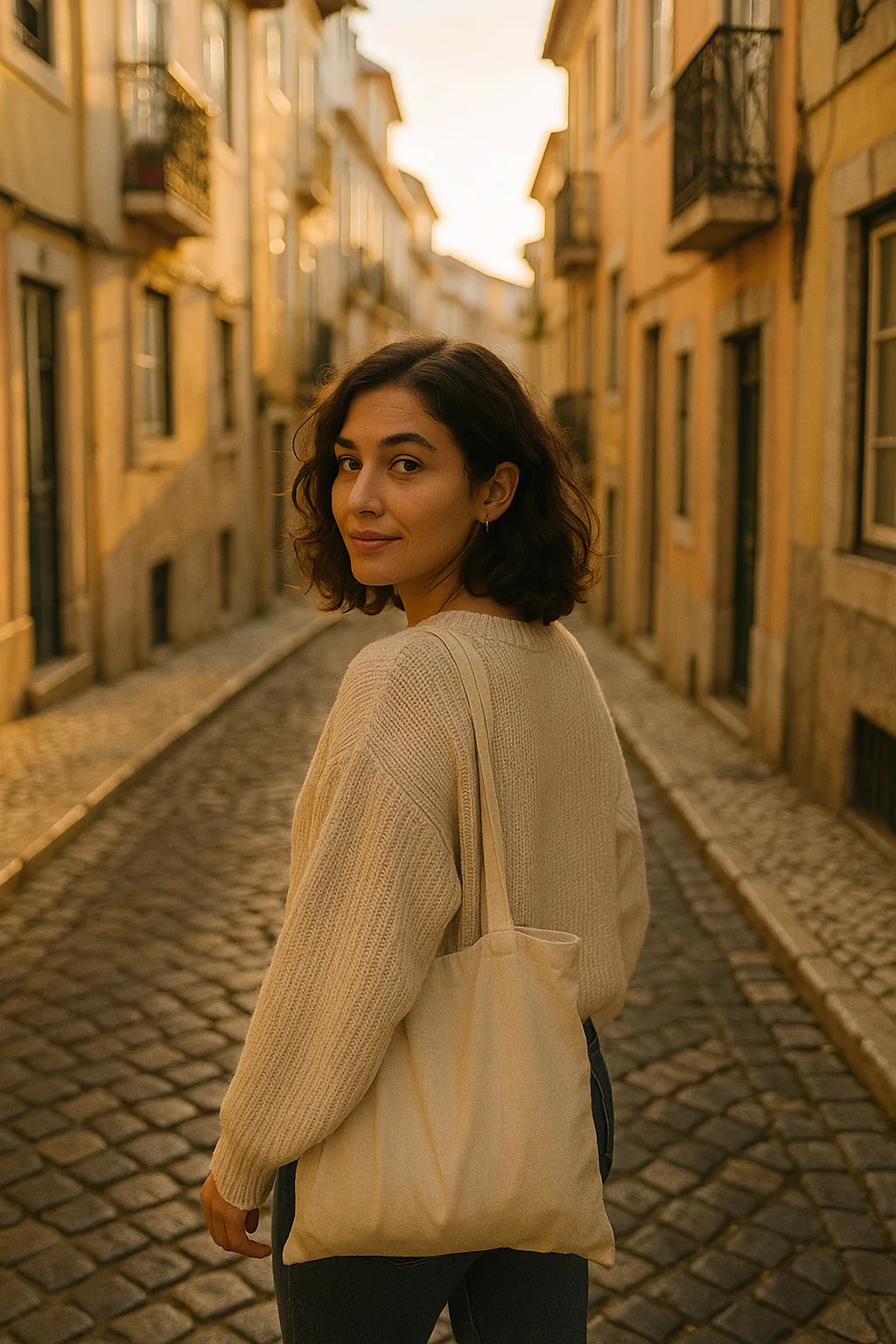
Above: prompts 37 and 38, generated in separate runs. Same hair, same face structure, same cream sweater, same silver earring — even though the camera angle, scene, and lighting are completely different. That's character consistency in action.
8. Ad Creative Variations
For paid ads, you want the same hook idea in 4–6 visual variants you can A/B. Anchor the concept, vary the execution.
Concept anchor: showing the chaos of "before our product" — a workspace overwhelmed by tabs/notifications.
- A laptop screen so full of browser tabs the favicons are unreadable, soft window light, photoreal, eye-level close-up, 9:16, mood: overwhelmed.
- A desk covered in sticky notes in every color, post-its overlapping, photoreal, top-down flat lay, 9:16, harsh overhead light, mood: chaotic.
- A person at a desk with both hands on their head, surrounded by floating notification badges (rendered like photoreal 3D objects), photoreal, eye-level wide, 9:16, mood: drowning.
- A whiteboard so densely covered in marker scribbles that no individual word is legible, fluorescent office light, photoreal, eye-level, 9:16, mood: clutter.
- A phone screen with 47 unread message badges glowing, dark room background, photoreal, close-up top-down, 9:16, mood: anxiety.
- A cup of coffee gone cold next to an open laptop showing a Zoom grid of 16 tiny faces, dim afternoon light, photoreal, 3/4 angle, 9:16, mood: drained.
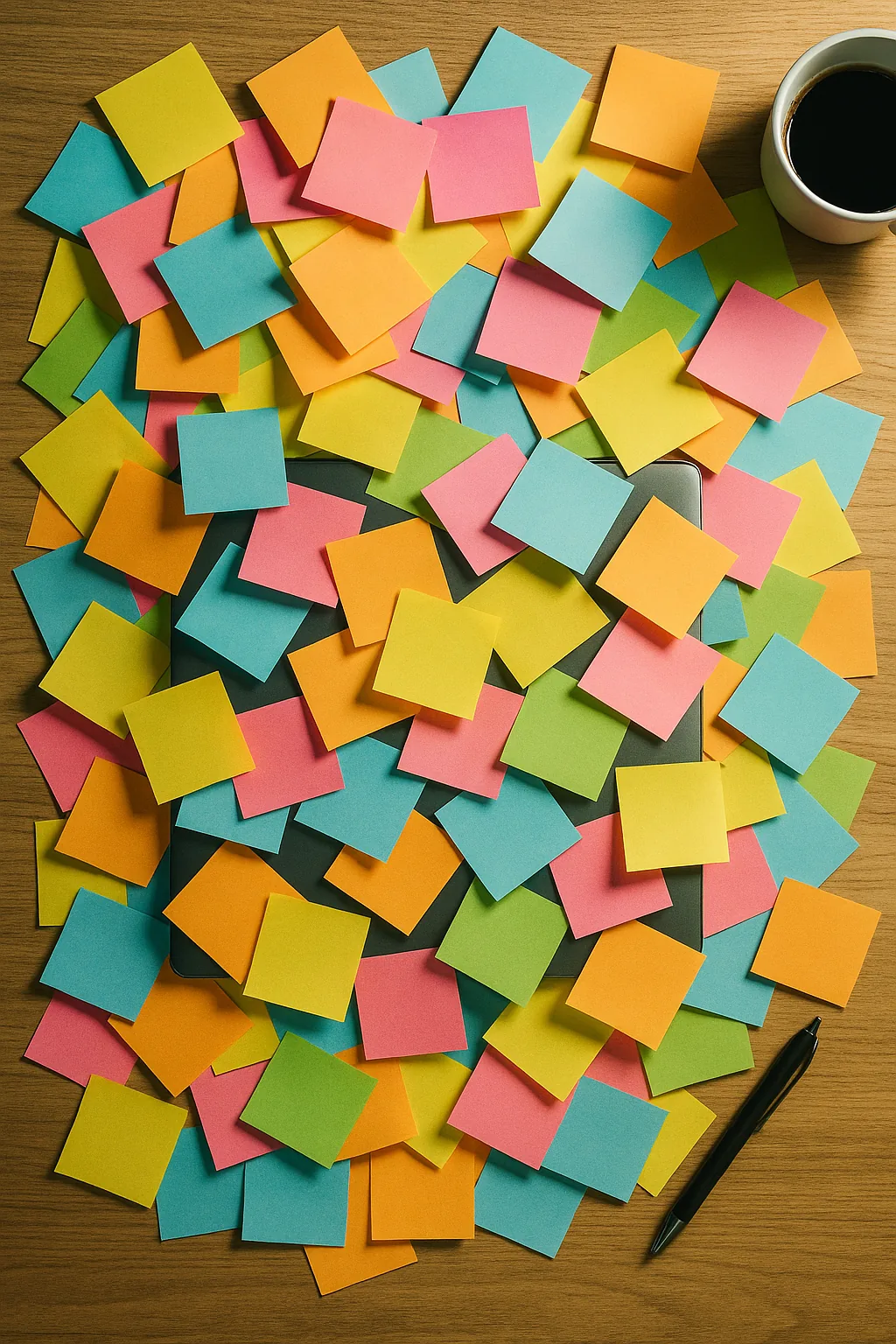
Above: prompt 44. Same "chaos" concept the other ad variants describe, executed as a top-down flat lay. Generate the other 5 prompts in this section and you have a full A/B test set.
9. Memes & Trend Templates
Photoreal memes outperform illustrated ones in 2026. Single subject, single contrast, ridiculous framing.
- A French bulldog wearing tiny round black sunglasses sitting alone at a long boardroom table with a half-eaten sandwich in front of it, photoreal, wide low-angle, 9:16, deadpan mood.
- A businessman in a full grey suit standing waist-deep in a swimming pool, holding a laptop above water, photoreal, eye-level wide, 9:16, mood: deadpan.
- A single grocery cart sitting in the middle of an empty highway at sunset, photoreal, wide low-angle, 9:16, mood: surreal.
- A cat in tiny silver judge's robes sitting behind a tiny wooden gavel and bench, photoreal, eye-level, 9:16, mood: judgmental.
- A man crying in a supermarket aisle holding a giant rotisserie chicken like a baby, photoreal, eye-level wide, 9:16, harsh fluorescent light.
- A toddler in a full pinstripe Wall Street suit pointing aggressively at a chart on an iPad, photoreal, 3/4 angle, 9:16, mood: deadpan boardroom.
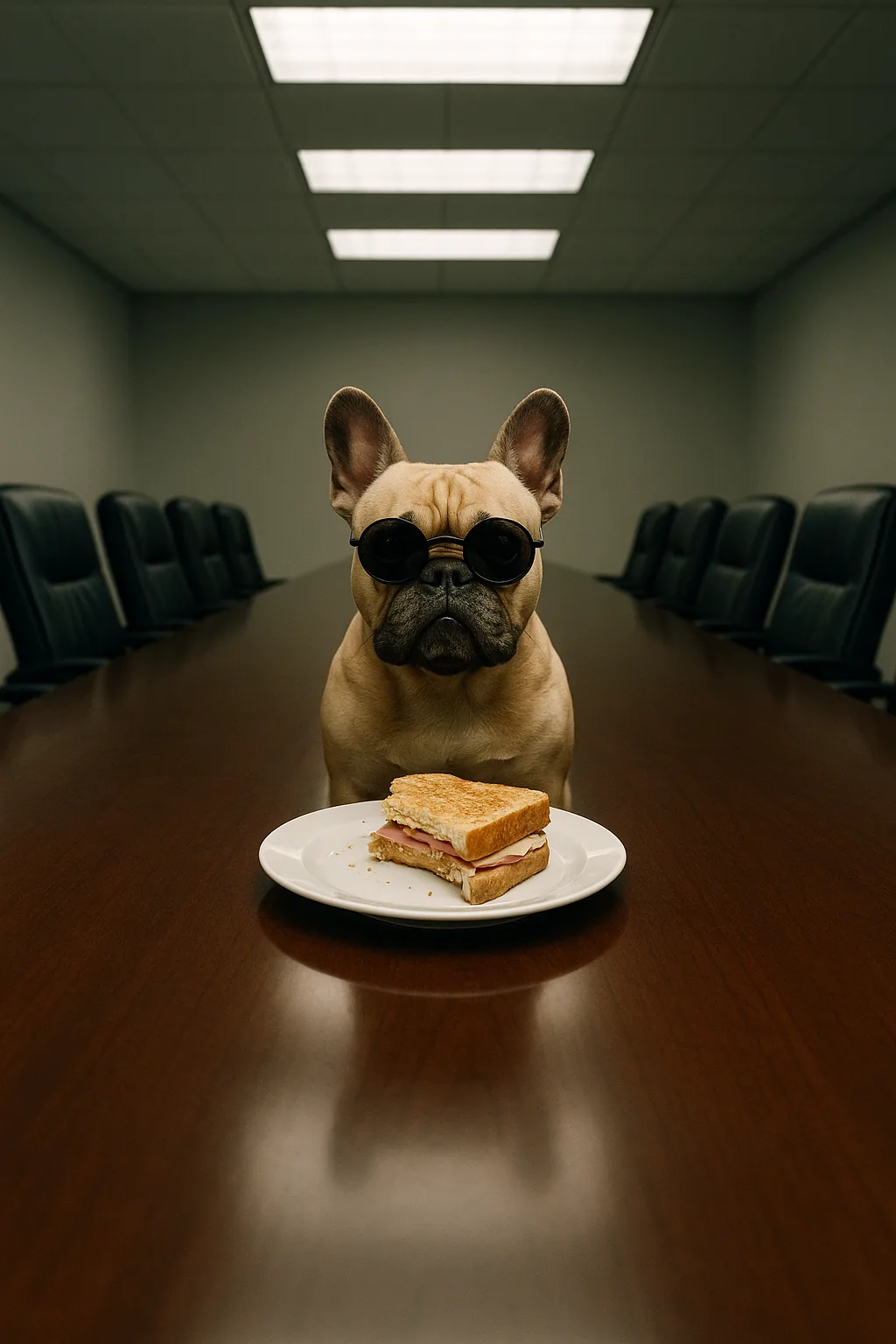
Above: prompt 49. Photoreal memes outperform illustrated ones because they feel like a stolen moment instead of a designed joke.
10. Comparison & Tier Charts
For "ranked," "tier list," and "X vs Y" formats. Use the in-image text capability to label the tiers.
- A photoreal flat lay of 5 ceramic coffee mugs in a row on a wooden table, each with a small label card in front reading
S,A,B,C,Din clean serif, top-down, soft daylight, 9:16. - A neat row of 4 paper coffee cups against a beige wall, each with text printed clearly down the side:
"Instant","Drip","Pour-over","Espresso", photoreal, eye-level, 9:16. - Two phones side by side on a marble surface, left phone screen labeled
"BEFORE", right phone screen labeled"AFTER", photoreal top-down, 9:16, soft window light. - A photoreal infographic-style frame with three illustrated stacks of books labeled
"Beginner","Intermediate","Pro", on a wooden desk, top-down, 9:16, warm lamp light. - A tier-list mockup on a corkboard with 5 horizontal rows labeled in handwritten marker
S,A,B,C,F, photoreal, eye-level, 9:16. - Two glass jars side by side, left labeled
"Excuses"(full of crumpled paper), right labeled"Results"(full of golden coins), photoreal, top-down, soft daylight, 9:16.
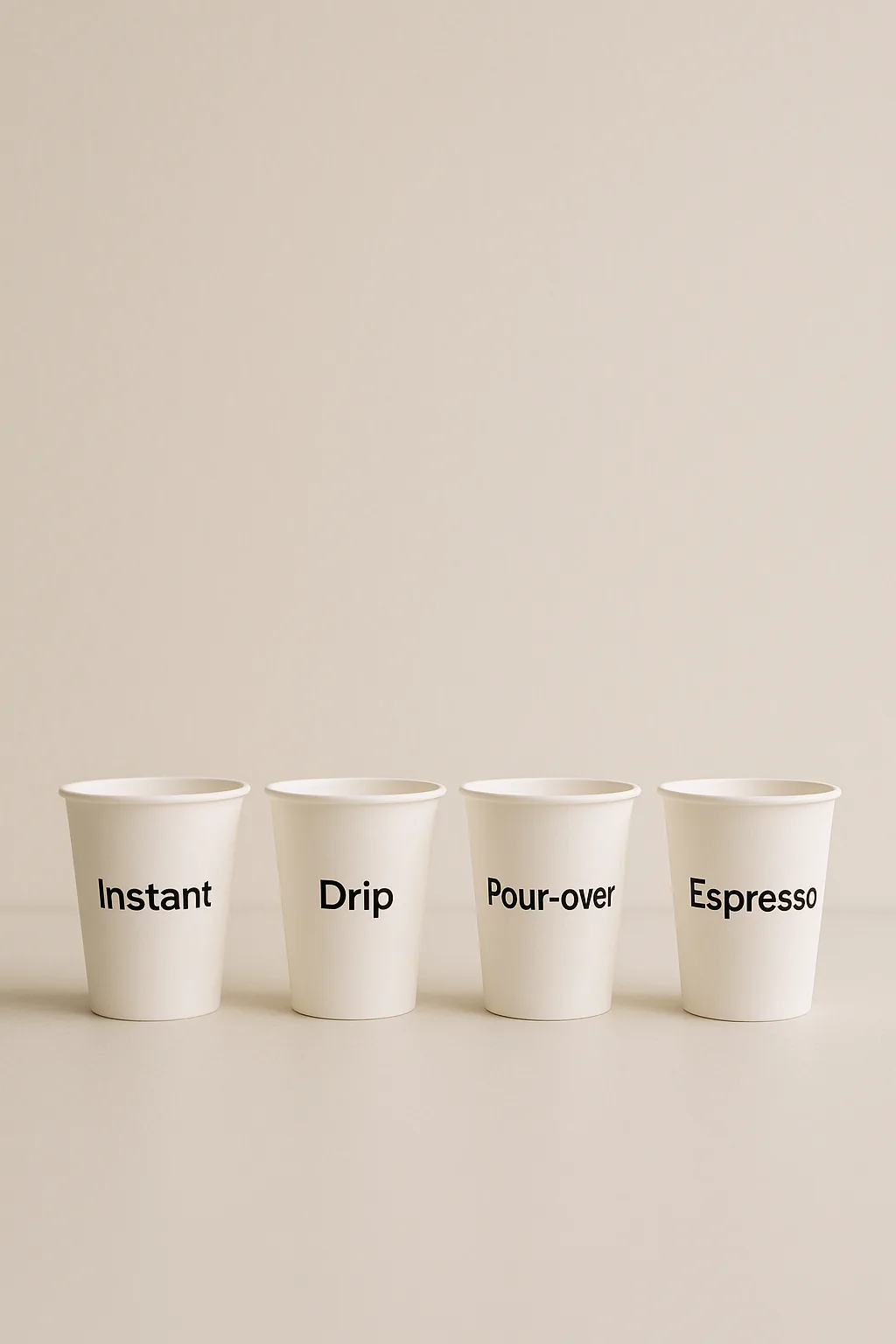
Above: prompt 56. Four cups, four perfect labels, in one shot. Drop the words from old prompt engineering ("8k, ultra detailed, masterpiece") — they fight clean typography.
11. Lifestyle Aspirational
Aesthetic frames for travel, fitness, lifestyle, and "soft life" niches. These get saved and reshared.
- A woman in a flowing white linen dress walking barefoot down a hot stone path in Santorini at golden hour, blue domes in the distance, photoreal, wide from behind, 9:16, dreamy.
- A man in a navy linen shirt sitting on a balcony in Mallorca with a glass of red wine, sun setting over the Mediterranean, photoreal, 3/4 angle, 9:16, mood: slow-living.
- A woman doing yoga at dawn on a wooden dock over a still lake, mountains in the background, photoreal, wide eye-level from behind, 9:16, soft mist on the water.
- A flat-lay desk with a laptop, ceramic teapot, fresh strawberries in a bowl, an open book, on a sunlit balcony in Lisbon, photoreal, top-down, 9:16, soft afternoon light.
- A woman in a cream knit sweater walking a golden retriever through a misty pine forest in autumn, photoreal, wide from behind, 9:16, mood: cozy.
- A man journaling at a small wooden café table in a Paris side street, photoreal, eye-level 3/4, soft overcast light, 9:16, mood: contemplative.

Above: prompt 61. Shoot from behind to get an aspirational lifestyle frame without depending on a specific face — easier to use as a recurring channel motif.
12. Faceless Quote & Mindset Frames
For motivation and mindset accounts that lean entirely on text. GPT Image 2 makes these look intentional, not lazy.
- A black leather journal open on a desk, handwritten in cursive on the right page:
"discipline is just remembering what you want", soft warm lamp light, photoreal close-up, 9:16, top-down 3/4. - A vintage cinema marquee at night with white plastic letters reading
"YOUR FUTURE IS WATCHING", photoreal, eye-level, 9:16, mood: dramatic. - A coffee shop chalkboard with handwritten chalk:
"romanticize the boring stuff", photoreal, eye-level, 9:16, soft daylight. - A torn page taped to a brick wall, typewriter font reading
"the algorithm rewards consistency, not perfection", photoreal, eye-level, 9:16, golden-hour shadow on the wall.
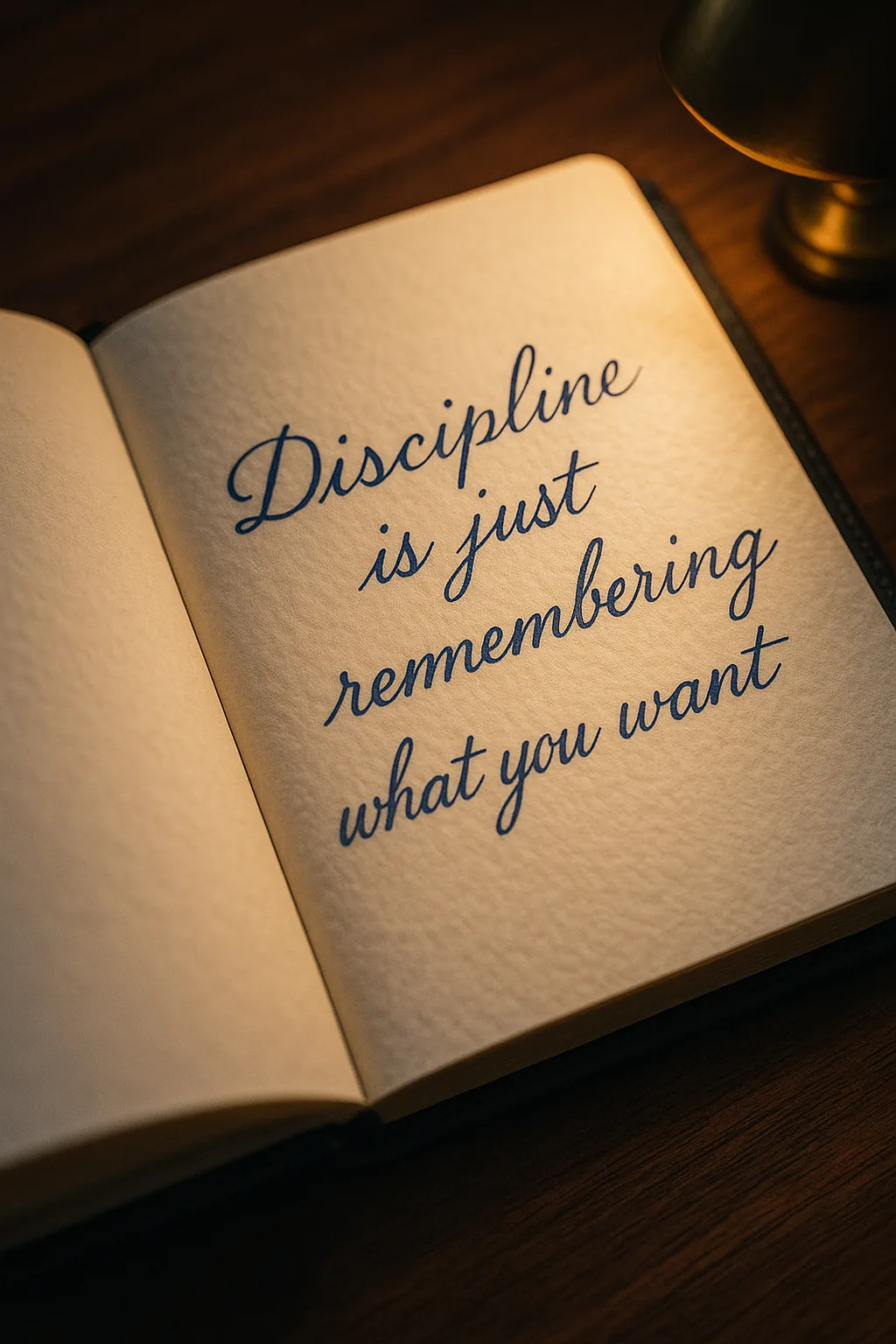
Above: prompt 67. Cursive is the format that broke the last generation of image models. GPT Image 2 handles it cleanly with a single instruction.
Advanced Prompting Techniques for GPT Image 2
Once the basics land, three techniques unlock the next level.
1. Iterative Refinement (One Variable at a Time)
When the first generation is 80% there, do not rewrite the entire prompt. Restate the full original prompt and change exactly one variable. The model will hold everything else constant.
- Change lighting only:
"…same image, but change lighting to soft north-facing window light, cooler color temperature." - Change framing only:
"…same image, but reframe as a low-angle hero shot, subject filling 60% of frame." - Change text only:
"…same image, but the sign now reads"PROOF OVER PROMISES"in the same font."
This is how you build a series that looks like it came from the same shoot.
2. Quality Language That Actually Works
Most "quality words" are noise. These few aren't:
- For photoreal: "shot on 35mm film," "shot on iPhone 15 Pro, candid," "editorial product photography," "shallow depth of field."
- For typography: "thin serif font," "handwritten in black sharpie," "embossed in gold serif," "white plastic letters."
- For light: "soft north-facing window light," "harsh midday sun," "neon," "golden-hour rim light," "warm tungsten."
Drop "ultra-detailed, 8k, masterpiece, trending on artstation." They make GPT Image 2 worse, not better.
3. Multi-Image Referencing
When you can pass in references, label them. The model treats [FACE], [PRODUCT], [STYLE] as roles, not styles.
Generate a product shot using
[PRODUCT](the bottle reference),[FACE](model's face), and[STYLE](the editorial reference image). Compose as a 3/4 angle hero shot, golden-hour window light, 9:16. Constraints: do not change the product label text, do not stylize the face.
This is how you get on-brand creatives at scale instead of one-off lucky generations.
6 Common GPT Image 2 Prompting Mistakes
Most "AI looks AI" problems are prompt problems, not model problems.
- Prompt overloading. Stacking 30 adjectives. GPT Image 2 prioritizes the first half of long prompts and dilutes the rest. Cut to one clear description per block.
- Vague style stacking. "Photoreal, cinematic, anime-inspired, vaporwave, fashion editorial" is five styles. Pick one.
- No composition cue. If you don't say where the subject is in the frame, the model centers it like a stock photo. Always specify framing.
- Unquoted text. If you want text inside the image, wrap it in straight quotes. Without quotes, the model treats the words as descriptive style.
- Drifting variables in a series. Changing two or three things between iterations breaks character consistency. Change one variable per iteration.
- Misapplied quality language. Words like "8k," "ultra-detailed," "masterpiece" come from the old Stable Diffusion era and make outputs worse on GPT Image 2. Replace them with photographic vocabulary.
Start Generating Viral Images Faster
The bottleneck for most creators is not prompt quality — it's volume. One great prompt is worth a hundred if you can run it at scale, swap characters, drop products in, and feed the outputs straight into a posting queue.
That is the entire point of Genviral AI Studio: one place to bulk-generate images for slideshows, ads, and faceless channels, with built-in character swapping, aspect-ratio controls, and direct hand-off to your TikTok, Instagram, and Pinterest schedulers.
Use the 70 prompts above as a starting library. Adapt the six-block formula for your niche. Then let Genviral handle the production line so you can focus on the part that actually moves growth: shipping daily.

Fekri
Co-founder of Genviral